
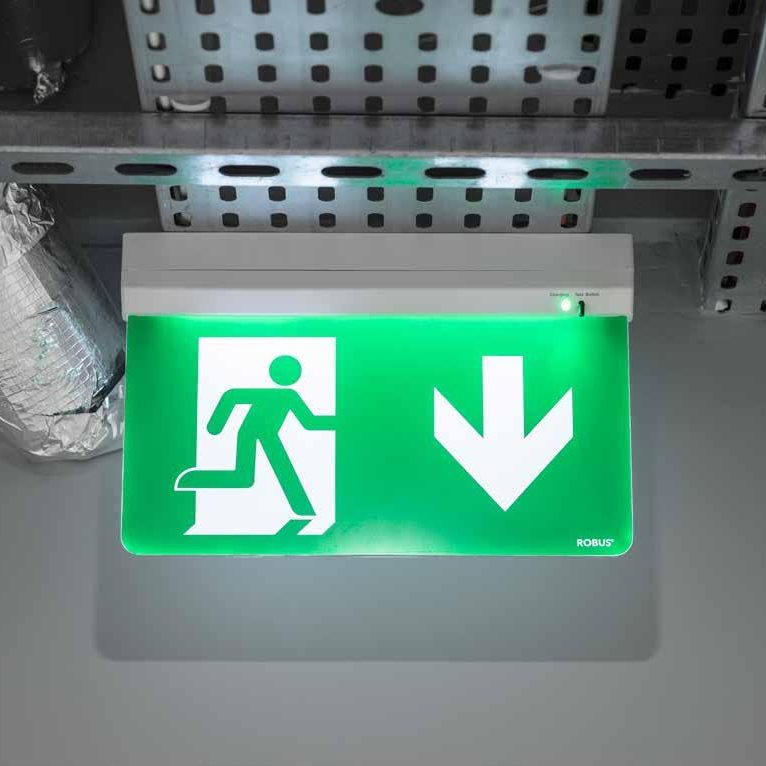
Emergency Lighting in Commercial Premises
Non-Domestic Settings (Businesses, Offices, Public Buildings)
1. Legal Framework
Regulatory Reform (Fire Safety) Order 2005 (RRO)
Applies across England and Wales (with similar laws in Scotland and Northern Ireland). The "Responsible Person" must ensure that emergency routes and exits are clearly signed and adequately lit if normal lighting fails.
Building Regulations (Approved Document B)
Mandates emergency escape lighting in nearly all non-domestic premises, aligning with BS 5266-1 for illumination and BS 5499-4 for safe signage.
2. Applicable Standards (BS 5266-1)
BS 5266-1 outlines the design, installation, duration, testing, and maintenance of emergency lighting systems. Key elements include:
Location & Coverage
Install lighting:
At exits, along escape routes, staircases, intersections, direction changes, and near first-aid equipment, fire alarms, manual release controls, refuges, disabled toilets, etc.
Minimum Illumination Levels
Escape routes (up to 2 m wide): ≥ 1 lux at floor level along the centre line.
Open areas over 60 m²: ≥ 0.5 lux, excluding the 0.5 m perimeter.
High-risk task areas: at least 10% of normal lighting levels.
Duration of Operation
Lights must run on battery for 3 hours, with a 1-hour minimum allowed only when immediate evacuation is guaranteed.
3. Testing & Maintenance
Monthly: Functional check (switch off supply, confirm lights activate, note charging status).
Annually: Full-duration (3-hour) discharge test.
Record-Keeping: Maintain logs of all tests, inspections, repairs, and commissioning certificates.